
By free-processing September 15, 2026
For a service business researching surcharges on invoices cards not present, the most important change from countertop payments is where disclosure happens.
A business that emails invoices, sends payment links, or charges stored cards cannot treat a sign in an office as the primary customer notice. The surcharge needs to appear in the transaction path before authorization, be separately identifiable in the transaction record and receipt, and apply only to eligible credit cards.
Stored-card and recurring billing require an additional layer of care. A customer may never visit a hosted payment page when the merchant initiates the charge, so existing customers need a deliberate notice and authorization review before the first surcharged billing cycle. A previously stored credential does not by itself prove that the customer agreed to a newly introduced surcharge.
Debit and prepaid exclusion is another critical control. Under current Visa U.S. merchant surcharge guidance, surcharging is limited to eligible credit-card transactions; Visa debit and prepaid cards cannot be surcharged.
Visa also limits the surcharge to the merchant’s applicable merchant discount rate or 3%, whichever is lower, so the configured percentage should reflect the merchant’s actual permitted limit rather than simply defaulting to the network maximum.
Mastercard similarly prohibits surcharges on Debit Mastercard and Mastercard prepaid cards. Its current U.S. merchant surcharge rules tie the permitted surcharge to the merchant’s cost of Mastercard credit acceptance and currently publish a 4% maximum surcharge cap.
Mastercard also requires clear customer disclosure at the point of interaction and the surcharge dollar amount on the transaction receipt, so merchants should configure remote checkout and receipts around the actual applicable merchant limit rather than treating 4% as a default rate.
This article was reviewed against publicly available network and regulatory information current as of September 15, 2026. Because card-network standards, acquirer procedures, and state laws change, businesses should confirm their production configuration before launch rather than treating any static article as permanent legal or network advice.
Surcharge on Invoices Card Not Present: How Remote Disclosure Works
A surcharge on invoices card not present program should be designed around the customer’s payment journey:
invoice created → available payment methods displayed → surcharge policy disclosed → card product identified → eligible credit card receives surcharge → debit/prepaid is excluded → customer sees final amount → authorization occurs → receipt records the surcharge.
That sequence matters because remote billing lacks the physical signals that normally surround an in-person transaction. The customer may receive a PDF invoice on Monday, click an emailed payment link Thursday, choose a stored card, and authorize the transaction from a hosted page without ever speaking to an employee.
The electronic payment experience therefore becomes the functional equivalent of the checkout counter. Visa’s U.S. guidance requires surcharge disclosure for online transactions and identifies the surcharge separately on the transaction receipt.
Mastercard requires clear disclosure at the point of interaction and the surcharge dollar amount on the receipt. Businesses should review the current Visa merchant surcharge guidance and Mastercard merchant surcharge rules when designing the workflow.
The broader mechanics of a compliant program—including eligibility, card-brand restrictions, and implementation controls—can be separated from this remote workflow by reviewing how a credit-card surcharge program is implemented and communicated.
For remote billing, however, the main operational question is not whether a sign exists. It is whether the customer sees the relevant fee before committing to the card payment.
What Replaces In-Store Signage for Emailed Invoices and Payment Links?

Remote disclosure should follow the customer from invoice delivery through payment completion instead of depending on a single isolated notice.
An emailed invoice can introduce the policy. For example, the invoice may state that eligible credit-card payments are subject to a specified surcharge where permitted and that another payment method, such as ACH, is available without that card surcharge.
The payment link should then lead to a hosted payment page that repeats the relevant disclosure and calculates the final charge based on the payment method actually chosen. This is important because the merchant may not yet know whether the card is credit, debit, or prepaid when the invoice is first created.
The confirmation screen should show the amount the customer is about to authorize. The post-payment receipt should then document what actually happened.
Surcharge Notice Before Payment
A surcharge notice before payment should communicate enough information for the customer to make a genuine payment choice before authorization.
At minimum, the remote workflow should make clear that an eligible credit-card payment carries a merchant-imposed surcharge, identify the applicable rate or amount as required by the relevant rules, and show the resulting amount before the customer submits the transaction.
If debit, ACH, or another payment method is offered without the card surcharge, that choice should also be understandable.
A disclosure that first appears on the emailed receipt is too late to perform this function. Likewise, hiding the policy behind a generic Terms link while the checkout screen simply changes the total creates unnecessary compliance and dispute risk.
For surcharge on invoices card not present, the safer design is layered disclosure: policy information on the invoice, operative disclosure on the payment page, final price before authorization, and surcharge detail on the receipt.
Remote Disclosure Placement
| Channel | Disclosure Point | Information the Customer Should Receive | Risk if Missing |
| Emailed invoice | Invoice body or payment section | Card-surcharge policy, applicable rate/method, alternative payment choice | Customer reaches checkout without understanding pricing |
| Payment link | Destination hosted page | Surcharge before card authorization and final amount | Surprise fee at final click |
| Hosted checkout | Before “Pay” or equivalent authorization | Eligible-card surcharge, dollar amount/final total, payment options | Customer cannot make an informed payment choice |
| Card on file | Advance customer notice plus applicable terms | New surcharge treatment and alternative payment method | Merchant initiates a fee the customer did not expect |
| Recurring billing | Enrollment and transition communications | How future card charges are calculated | Prior authorization may not address new pricing |
| Receipt | Post-payment confirmation | Base transaction, surcharge amount, total charged | Poor recordkeeping and higher dispute risk |
Exact wording and placement should be checked against the applicable network, acquirer, and state rules rather than copied from a generic template.
Invoice Surcharge Compliance: What the Invoice and Receipt Must Show

Good invoice surcharge compliance separates three stages that businesses often combine: quoting the amount owed, choosing a payment rail, and authorizing a particular card.
If an invoice is payable by multiple methods and the customer has not yet selected a card, it may be inappropriate for the invoice accounting total to assume that a card surcharge will definitely apply.
The invoice can instead disclose that a surcharge applies to eligible credit-card payments and allow the hosted payment page to calculate the final charge after identifying the payment method.
If the business already knows that an eligible credit card is the selected payment method and its system has been configured accordingly, the surcharge can be presented as a separate, clearly labeled component of the amount to be charged.
What the Invoice Should Show
A useful remote invoice generally makes these elements easy to locate:
- service subtotal;
- taxes or other required charges, where applicable;
- payment methods available;
- credit-card surcharge disclosure;
- surcharge percentage or calculation method where required;
- surcharge amount when it can be determined correctly;
- due date; and
- total payable for the payment method being authorized.
Do not combine a true surcharge invisibly into the underlying service price while simultaneously describing the transaction as a surcharge program. That creates ambiguity about what price was quoted and what fee the cardholder actually paid.
Designing Surcharge on Invoices Card Not Present Without a Hidden Fee
When implementing surcharge on invoices card not present, avoid the design pattern in which the invoice says “Amount Due: $2,500,” the customer clicks “Pay,” enters a card, and only after the final button discovers that a larger amount was charged.
A better system identifies the chosen payment method, evaluates eligibility, displays the resulting surcharge and total, and then requests authorization.
This is especially important in jurisdictions with their own price-display requirements. New York, for example, requires a business imposing a credit-card surcharge to clearly and conspicuously post the total credit-card price, inclusive of the surcharge, before the sale.
New Jersey requires the surcharge amount to be disclosed before the consumer incurs the charge and specifically requires clear electronic disclosure on the checkout page for website, app, and kiosk transactions.
Invoice and Receipt Fields
| Field | Invoice | Hosted Payment Page | Receipt |
| Merchant/service identity | Yes | Yes | Yes |
| Service subtotal | Yes | Yes | Yes |
| Tax, if applicable | Yes | Yes | Yes |
| Surcharge policy | Yes | Yes | Reflected in completed transaction |
| Surcharge percentage/method | When applicable | Before authorization | Include appropriate detail |
| Surcharge dollar amount | If determinable | Before authorization once eligible card is known | Yes |
| Final card total | If determinable | Yes, before authorization | Yes |
| ACH/no-surcharge option | If offered | Preferably visible | Payment method recorded |
| Masked payment method | Optional | During selection | Yes |
| Due/payment date | Yes | Relevant to payment | Transaction date |
Visa’s published U.S. materials say the final surcharge should be identified separately on the transaction receipt. Mastercard similarly requires the surcharge dollar amount on the transaction receipt.
Card-on-File Surcharge Disclosure for Stored Credentials
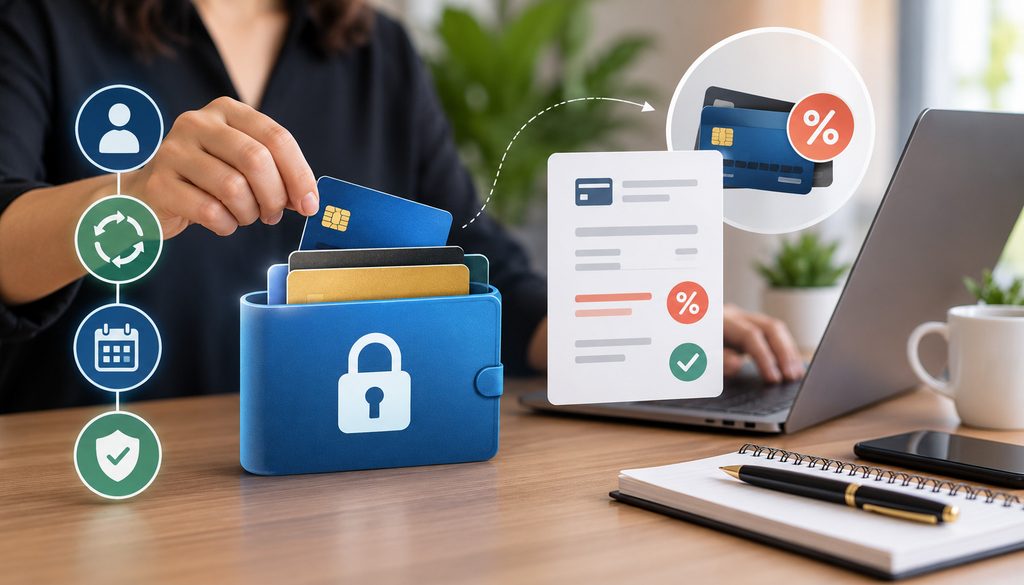
Card on file surcharge disclosure is more difficult than one-time checkout disclosure because the customer may not interact with a payment screen when the charge occurs.
A stored credential merely means the merchant or its payment provider can use previously stored payment credentials under an established arrangement.
Visa distinguishes customer-initiated transactions from merchant-initiated transactions and identifies recurring and unscheduled credential-on-file transactions as categories that can involve merchant initiation under prior instructions.
That does not mean a merchant may add any new amount to every future charge merely because the card is stored.
For example, imagine an agency has charged a client’s stored card $1,000 every month for a year. The business introduces a surcharge next month. The original stored-card consent and the new surcharge policy are separate compliance questions.
Existing customers should receive notice before the first newly surcharged charge and should be given a reasonable path to choose another available payment method.
Depending on the existing agreement, applicable law, network/acquirer requirements, and how the amount was originally authorized, the business may also need to update its billing authorization or contract terms.
There is no single national “X-day notice period” that can safely be stated for every card-on-file surcharge transition. Businesses should not copy an ACH change-notice rule, subscription statute, or one processor’s policy and present it as a universal card-network requirement.
Existing Card-on-File Customers
A conservative card on file surcharge disclosure rollout looks like this:
- Identify every customer whose card can be charged without a new checkout interaction.
- Identify which agreements currently describe amount, frequency, and payment method.
- Send advance notice explaining the effective date and credit-card surcharge.
- Explain any ACH, check, or other no-surcharge payment alternative.
- Provide a practical way to update the payment method.
- Update the authorization or agreement where required.
- Record when and how the notice was delivered.
- Apply the surcharge only after the transition requirements have been satisfied.
This approach is particularly important when surcharge on invoices card not present is being introduced into an established receivables program rather than included from the beginning.
A business that already uses automated billing can also compare the operational issues discussed in recurring billing setup and subscription payment controls.
New Card-on-File Customers
For new customers, build the disclosure into enrollment rather than attempting to repair it later.
The payment authorization should describe the card-on-file relationship, what future charges may occur, how the amount or calculation method works, and how any surcharge applies where permitted. It should also explain the customer’s available payment alternatives.
Avoid relying on a vague checkbox such as “I agree to all future charges.” The more specific the billing arrangement is at enrollment, the stronger the operational record becomes.
Recurring Payment Surcharge Rules for Existing and New Customers
Recurring payment surcharge rules require businesses to distinguish three transaction patterns that may look similar in an accounts-receivable system.
A customer-initiated transaction occurs when the customer actively participates in a checkout or invoice payment. The customer can see the charge and authorize it during the transaction.
A scheduled recurring transaction uses a stored credential according to an agreed recurring arrangement. A membership, maintenance agreement, or monthly retainer may fall into this category depending on how the billing program is structured.
A merchant-initiated transaction occurs without the cardholder taking a new checkout action and must relate back to the appropriate customer agreement or standing instruction under the network framework.
Those categories should not be treated as interchangeable merely because the same gateway processes them.
Recurring Billing Authorization
A well-designed recurring authorization should address, as applicable:
- the amount or method for determining the amount;
- billing frequency;
- when the stored credential can be used;
- how changes are communicated;
- the surcharge treatment where permitted;
- available alternatives to card payment;
- cancellation or payment-method-change procedures; and
- any other disclosures required by applicable law.
Introducing a surcharge into an existing recurring plan changes the amount the customer may be charged. That is why the first surcharged cycle deserves special review.
Under recurring payment surcharge rules, a business should not assume that a customer’s original authorization to pay a $100 monthly service fee automatically authorizes a $100 service fee plus any later-created card surcharge.
Card-on-File vs. Recurring Transactions
| Payment Type | Customer Interaction at Charge | Notice Consideration | Authorization Issue |
| One-time invoice card payment | Customer actively checks out | Disclosure during payment flow | One-time authorization |
| Customer-selected stored card | Customer selects saved credential | Disclosure before current authorization | Existing storage consent plus current transaction |
| Scheduled recurring card | Usually no interaction each cycle | Terms at enrollment; transition notice for new surcharge | Recurring authorization must support charging arrangement |
| Merchant-initiated unscheduled COF | Merchant submits under prior instruction | Customer may not see checkout | Prior agreement and MIT treatment matter |
| ACH recurring debit | Separate bank-payment rail | ACH-specific authorization and change rules | Nacha/ODFI requirements apply |
The safest implementation treats card on file surcharge disclosure, stored-credential status, and recurring authorization as related but distinct controls.
Why Debit and Prepaid Cards Are the Biggest CNP Compliance Gap
Debit exclusion is where many remote surcharge programs fail.
Visa’s U.S. rules permit surcharging only qualifying credit transactions; Visa debit and prepaid cards cannot be surcharged. Mastercard’s U.S. merchant materials also state that surcharges are not allowed on Debit Mastercard or Mastercard prepaid cards.
The difficulty in a card-not-present environment is that employees cannot look at the physical card, and customers may not accurately know or describe the card’s product type.
For surcharge on invoices card not present, a manually keyed card number is not evidence that the product is credit. Neither is a stored token.
Why Keyed Debit Is Still Debit
A customer might provide a debit card number over the phone, enter it into an emailed payment link, or have an employee key it into a virtual terminal.
The entry method changes; the underlying card product does not.
Visa specifically states that a debit card remains a debit card even when a transaction is processed without PIN entry. Its network materials also distinguish credit, debit, and prepaid source-of-funds data.
Therefore, “we ran it as credit” is not a valid surcharge-eligibility control.
Stored Debit Cards Create the Same Problem
Tokenization does not transform debit into credit.
If a customer’s debit credential is tokenized and stored for later billing, the system needs to suppress the surcharge when that token is used. Staff should not infer eligibility from the fact that the token has successfully processed previous card-not-present transactions.
How Gateway BIN and Card-Product Checks Help
Payment gateways and processors can use card-account metadata, including BIN/IIN and network product information, to help identify whether a credential represents a credit, debit, or prepaid product.
The merchant should use the card-product classification supported by its processor or gateway instead of maintaining an employee-created spreadsheet of card number ranges.
BIN data should not be presented as infallible. Card portfolios change, accounts can be reissued or converted, and different providers expose different metadata. The merchant needs to validate what its actual payment stack returns and what happens when product classification is unavailable or ambiguous.
Conceptually, the control should operate like this:
card entered or stored token selected
→ processor/gateway identifies product
→ eligible credit product: surcharge logic may run
→ debit or ineligible prepaid product: surcharge suppressed
→ final amount displayed or submitted
→ transaction processed
Card Eligibility Table
| Card Type | Surcharge Eligibility | Detection Method | Control |
| Eligible credit card | Potentially eligible, subject to network/state/acquirer rules | Processor or gateway card-product data | Apply configured compliant rate |
| Visa debit | No Visa surcharge | Network/product identification | Suppress |
| Debit Mastercard | No Mastercard surcharge | Network/product identification | Suppress |
| Visa prepaid | No Visa surcharge | Network/product identification | Suppress |
| Mastercard prepaid | No Mastercard surcharge | Network/product identification | Suppress |
| Unknown/ambiguous product | Do not guess | Processor/gateway escalation | Default to conservative handling until classified |
Offering ACH or eCheck as a No-Surcharge Alternative
For many service businesses, ACH solves a customer-experience problem as much as a cost problem.
If a $2,500 invoice offers only “pay by credit card plus surcharge,” the customer can feel trapped. If the same invoice offers an ACH or eCheck option without that card surcharge, the customer has a clear alternative.
That can be particularly useful for contractors, agencies, accountants, B2B service firms, property-related services, and other businesses with comparatively large invoices.
ACH is not “a card payment without the fee.” It is a separate bank-payment rail with its own authorization, return, account-validation, risk-management, and processing requirements.
Nacha’s guidance explains that consumer ACH debits require appropriate authorization and that recurring authorizations have specific requirements. Businesses implementing the alternative should review Nacha guidance on ACH payments and authorization and the requirements imposed by their ODFI or ACH provider.
A $2,500 Remote Invoice Example
Suppose a consulting firm issues a $2,500 invoice.
The invoice could present:
Service amount: $2,500
ACH/eCheck: $2,500
Eligible credit card: $2,500 plus the configured compliant surcharge
Debit/prepaid: no credit-card surcharge where the applicable network prohibits it
The example intentionally does not assign a universal surcharge percentage. The system should use the rate approved and configured for that merchant after applying the relevant network, acquirer, and state limits.
For a surcharge on invoices card not present workflow, the key point is that the customer understands the choice before authorization.
Why ACH Can Improve Acceptance
ACH provides a no-card-surcharge route without requiring the customer to mail a check or call the office.
For corporate accounts, accounts-payable teams may already prefer bank payments because they can reconcile the transfer against an invoice number. For large-ticket consumer services, a bank option gives a customer who dislikes the card fee another way to pay electronically.
It can also reduce arguments about the surcharge because the business is offering a genuine payment choice rather than presenting the fee as unavoidable.
Payment Alternatives
| Method | Card Surcharge? | Cost Pattern | Customer Experience |
| Eligible credit card | May apply where permitted | Card acceptance costs plus compliant surcharge program | Convenient; higher displayed total |
| Debit/prepaid card | Card surcharge suppressed where network rules prohibit | Merchant still incurs processing cost | Familiar card experience |
| ACH/eCheck | Not a credit-card surcharge transaction | Separate ACH/provider fee structure | Useful for larger invoices and AP teams |
| Check | No card surcharge | Administrative/deposit cost | Slower and manual |
| Dual-pricing structure | Different pricing model | Depends on program | Two prices presented rather than surcharge added later |
Multi-State Rules for Remote Service-Business Billing
A business serving customers in multiple states should not assume that its headquarters state’s rules automatically determine every remote transaction.
State laws can affect whether a surcharge is permitted, how the price is presented, what disclosure must occur, how much may be charged, and how consumer transactions are treated. Tax treatment is another distinct state-law question.
That makes surcharge on invoices card not present more complicated for an agency in one state that bills customers across ten others than for a local business serving one jurisdiction.
Network compliance and state-law compliance should therefore be modeled separately.
Customer Location vs. Merchant Location
There is no responsible one-sentence rule saying “always use the merchant’s state” or “always use the customer’s state.”
Applicability can depend on the statute, transaction facts, contracting structure, merchant location, customer location, and other legal considerations. Multi-state businesses should obtain jurisdiction-specific guidance from counsel and coordinate that analysis with the acquirer.
Representative Multi-State Compliance Matrix
A complete 50-state table is risky because statutes and regulatory interpretations change. A better internal document records only jurisdictions the business has actually researched and includes source dates.
| State | Current Rule Relevant to Remote Billing | Disclosure/Price Issue | Tax Treatment | Source Date |
| New York | Surcharge permitted subject to state pricing restrictions | Total credit-card price inclusive of surcharge must be clearly posted before sale, or qualifying two-tier pricing used | Verify separately | NY guidance reviewed Sept. 2026 |
| New Jersey | Surcharge cannot exceed seller’s actual processing cost | Amount must be disclosed before charge; website/app checkout requires clear electronic notice | Verify separately | NJ DCA guidance reviewed Sept. 2026 |
| Colorado | Credit-card surcharge allowed within state statutory constraints | Online notice required before transaction; debit excluded under statute | Verify separately | Colorado statute/guidance reviewed Sept. 2026 |
New York’s rule requires the higher total credit-card price to be presented before the sale, while New Jersey explicitly addresses electronic checkout disclosure.
Colorado permits credit-card surcharging under statutory limits and requires advance disclosure for online transactions; a July 2026 Colorado Attorney General enforcement announcement reinforced the state’s surcharge limits and disclosure expectations.
This representative matrix is not a substitute for a current state-law review.
State-Specific Configuration
A multi-state billing operation may need:
- a jurisdiction matrix;
- state-specific eligibility logic;
- payment-page variations;
- invoice wording variations;
- rate limitations by jurisdiction;
- tax configuration;
- a named source for each rule; and
- the date the rule was last verified.
Do not allow staff to override those controls casually.
Tax Treatment Is a Separate Question
Whether the surcharge itself is included in the taxable sales price varies by jurisdiction and transaction type.
That issue should be evaluated separately from invoice surcharge compliance. A card network can permit a surcharge while a state tax authority separately determines how the amount enters the sales-tax base.
Network authorization is not a tax ruling.
Service Business Zero Cost Processing: Surcharge vs. ACH vs. Dual Pricing
Service business zero cost processing is best understood as an economic or marketing description, not a claim that the payment system literally operates without expense.
A merchant may shift some card-acceptance costs through a compliant surcharge or use another pricing structure, but gateways, merchant accounts, software, ACH transactions, disputes, PCI responsibilities, and administrative work can still create costs.
A broader discussion of the economics appears in the analysis of hidden costs behind free payment processing models. The remote implementation still needs to identify precisely which pricing model it is using.
Surcharge vs. Convenience Fee
A surcharge is a fee associated with use of a qualifying credit card.
A convenience fee is a separate network concept with its own conditions and eligible circumstances. Businesses should not rename a surcharge “convenience fee,” “technology fee,” or “administrative fee” merely to avoid surcharge rules.
Substance matters more than the label.
Surcharge vs. Dual Pricing
A remote invoice surcharge starts with a base amount and adds a permitted fee when an eligible credit card is used.
Dual pricing presents two prices—for example, a card price and another payment-method price—under the rules applicable to that pricing structure.
Those approaches can create different disclosure and state-law consequences. Do not configure a surcharge engine while describing the invoice as dual pricing.
Surcharge vs. Cash Discount
A cash discount also starts from a different pricing structure.
Visa’s guidance distinguishes a properly displayed alternative-payment discount from a surcharge added to the normal price. Businesses should not mix terminology among invoices, contracts, websites, and receipts because inconsistent language can make the actual pricing structure difficult to determine.
For businesses comparing broader economics, free-processing models and small-business payment costs provides additional background.
In service business zero cost processing, clarity about the model is therefore part of compliance: know whether the customer is paying a surcharge, seeing dual prices, receiving a discount, or paying through ACH.
A Step-by-Step Remote Surcharge Rollout
A successful launch should be treated as a billing-system project, not simply a percentage added to invoice totals.
The following workflow can be used for surcharge on invoices card not present implementations.
- Identify every payment channel: Map emailed invoices, hosted pages, virtual terminal transactions, telephone payments, stored cards, recurring billing, and ACH.
- Confirm network eligibility: Document the Visa, Mastercard, and other accepted-brand requirements that apply.
- Confirm state rules: Review every material jurisdiction instead of assuming one national rule.
- Confirm acquirer and processor support: Ask how the program must be enabled and what notification or registration procedures currently apply.
- Configure the approved surcharge rate: Use the merchant-specific limit rather than copying a network maximum.
- Configure debit and prepaid exclusion: Confirm that ineligible products cannot inherit the credit-card surcharge.
- Configure card-product identification: Determine what card metadata the gateway uses and what happens when classification is uncertain.
- Update invoice templates: Add the payment-method disclosure and relevant surcharge information.
- Update hosted payment pages: Ensure the customer sees the applicable fee and total before authorization.
- Add ACH/eCheck where appropriate: Give customers a clearly separate bank-payment option.
- Update receipts: Verify that surcharge amount and final total appear correctly.
- Identify existing stored-card customers: Separate them from customers who actively pay each invoice.
- Send advance notice: Explain the effective date, surcharge treatment, and payment alternatives.
- Update authorizations where required: Review recurring agreements and stored-card terms.
- Test an eligible credit card: Confirm correct rate, amount, total, and receipt.
- Test a debit card: Confirm the surcharge is suppressed.
- Test a prepaid credential if the processor supports test coverage: Confirm ineligible products are handled correctly.
- Test ACH: Confirm the card surcharge does not leak into the bank-payment flow.
- Test recurring billing: Review the transaction type, amount, and customer record.
- Audit the first billing cycle: Reconcile invoices, gateway data, processor reporting, and customer receipts.
- Review an exception report: Investigate unexpected product classifications, manual overrides, and missing disclosure records.
- Preserve documentation: Save rules, approvals, configuration evidence, notices, authorizations, and tests.
Rollout Sequence
| Step | System or Document | Control Test |
| Rules review | Compliance file | Current network/state sources dated |
| Acquirer setup | Merchant account | Program enabled appropriately |
| Gateway configuration | Payment gateway | Correct rate and product filtering |
| Invoice update | Billing software | Policy visible before payment |
| Hosted page update | Checkout | Final amount shown before authorization |
| Stored-card transition | CRM/billing system | Notice record attached |
| ACH implementation | Bank-payment workflow | Separate authorization |
| Receipt configuration | Gateway/invoicing | Surcharge separately displayed |
| First-cycle review | Reporting | Invoice, gateway, deposit data reconcile |
Gateway Configuration Questions
Before launch, ask the gateway or processor:
- How is the surcharge calculated?
- What merchant-specific cap is configured?
- What card-product data determines eligibility?
- How are debit and prepaid credentials suppressed?
- Does stored-token classification remain available on future transactions?
- What happens when product type cannot be determined?
- How is surcharge data transmitted to the acquirer/network?
- How is the surcharge displayed on the receipt?
- How do full and partial refunds treat the surcharge?
- What reporting fields identify the base amount and surcharge?
Do not assume every gateway supports every control.
A Customer-Notice Framework
A customer notice should communicate facts rather than sound like promotional copy.
A useful framework is:
Effective date: when the new payment treatment begins.
Affected method: eligible credit-card payments.
Pricing: surcharge percentage or method as required.
Alternative: available ACH/eCheck or other payment method without that credit-card surcharge.
Action: where the customer can update a stored payment method.
Contact: how to resolve questions before the first affected payment.
That framework is not legal boilerplate. The actual language should reflect the relevant network, state, consumer-protection, contract, and processor requirements.
For recurring payment surcharge rules, preserve evidence that the notice was sent and any resulting authorization change.
Common Card-Not-Present Surcharge Mistakes
Remote billing creates mistakes that rarely appear in a traditional countertop workflow.
One common problem is assuming that existing office signage somehow covers an emailed invoice. Another is having a payment portal calculate the surcharge correctly but failing to show the amount until after the payment button is clicked.
A third is allowing stored debit tokens to inherit the same rule as stored credit cards.
Common Mistakes
| Mistake | Compliance Risk | Better Approach |
| Relying on doorway signage for emailed invoices | Remote customer may never see disclosure | Put disclosure in the invoice/payment path |
| Hiding fee until final click or receipt | Customer does not see final price before authorization | Display surcharge and total before submission |
| Surcharging keyed debit | Entry mode confused with card product | Use processor/gateway product identification |
| Surcharging stored debit token | Stored credential treated as credit | Retain product-level eligibility logic |
| No separate surcharge line | Fee becomes difficult to identify and audit | Show surcharge distinctly |
| No notice to existing card-on-file customers | Customer experiences unexpected higher charge | Use documented transition process |
| Same configuration in every state | State restrictions ignored | Maintain jurisdiction-specific matrix |
| Manual card-type guessing | Human classification is unreliable | Use supported network/product data |
| Receipt omits surcharge detail | Weak transaction record | Configure receipt field and audit it |
| Recurring billing treated like one-time checkout | Customer never sees payment-page disclosure | Address notice and authorization separately |
| ACH treated as card processing | Wrong authorization/risk assumptions | Build ACH as separate payment rail |
| Staff override surcharge controls | Debit or excessive surcharge can slip through | Restrict overrides and report exceptions |
An undisclosed or unexpected fee can also contribute to disputes. Preserve the invoice, the relevant disclosure, payment authorization, receipt, and any advance customer notice. That documentation does not guarantee that a chargeback will be won, but it creates a much more coherent record than a receipt alone.
The broader causes and documentation issues surrounding disputes can be reviewed in chargeback prevention and transaction-record practices.
Refunds
Refund treatment should be configured according to the current network and processor rules applicable to the transaction.
Do not build refund logic from assumption. Confirm how full refunds, partial refunds, and surcharge components are represented by the processor, and include those cases in testing.
Statement Descriptors
A recognizable statement descriptor is especially important in remote billing.
Someone who clicked an invoice link or whose card was charged automatically may not remember the merchant’s legal entity name several weeks later. A descriptor customers can associate with the service can reduce confusion and unnecessary payment inquiries.
Exception Reporting
A useful daily or billing-cycle exception report should flag:
- debit transaction carrying a surcharge;
- prepaid transaction carrying a surcharge when ineligible;
- eligible credit transaction missing expected surcharge;
- surcharge above configured merchant limit;
- manual surcharge override;
- recurring transaction lacking required notice record;
- ACH transaction with card surcharge data;
- mismatch between invoice surcharge and receipt surcharge; and
- unclassified card product.
Exception reporting converts compliance from a launch project into an ongoing control.
Remote Invoice and Card-on-File Surcharge Checklist
Before launching surcharge on invoices card not present, the operations team should be able to check every item below rather than relying on a verbal assurance that “the gateway handles it.”
- Confirm the surcharge program is permitted for the business and transaction type.
- Verify current Visa rules.
- Verify current Mastercard rules.
- Check other accepted card-brand requirements.
- Verify relevant state restrictions and disclosure rules.
- Confirm current processor/acquirer support and onboarding requirements.
- Confirm the merchant-specific surcharge percentage/cap.
- Configure surcharge only for eligible credit cards.
- Block debit and prepaid products where required.
- Test the gateway’s card-product identification.
- Document what happens with unknown product classification.
- Update the invoice template.
- Add clear surcharge disclosure.
- Add the surcharge percentage or calculation information where required.
- Keep the surcharge separately identifiable.
- Update the hosted payment page.
- Update emailed payment-link copy.
- Show the final amount before card authorization.
- Update the receipt.
- Add an ACH/eCheck alternative where appropriate.
- Implement ACH authorization separately.
- Identify existing card-on-file customers.
- Send advance notice before their first surcharged cycle.
- Update stored-card or recurring authorization where required.
- Preserve customer-notice records.
- Test an eligible credit-card payment.
- Test a manually keyed debit payment.
- Test a stored debit token.
- Test prepaid handling.
- Test ACH.
- Test a recurring card charge.
- Verify refund handling.
- Audit the first billing cycle.
- Review exception reports.
- Retain compliance documentation.
A useful compliance file should contain network rules, acquirer or processor approval/configuration records, the state-law matrix, invoice template, hosted-page screenshots, customer-notice template, card-on-file authorization, ACH authorization, test-transaction results, and first-cycle audit.
That documentation also helps future employees understand why the system is configured the way it is.
Frequently Asked Questions
Can I add a surcharge to an emailed invoice?
Potentially, but surcharge on invoices card not present should not mean blindly increasing every invoice total. The business must first confirm that surcharging is permitted for the transaction, network, card product, jurisdiction, and merchant account.
The customer should see the relevant disclosure before authorizing the card. If the invoice supports several payment methods, the hosted payment page can often determine whether the chosen card is actually surcharge-eligible before calculating the final total.
What replaces in-store surcharge signage for remote payments?
The transaction path becomes the disclosure mechanism.
The invoice can introduce the policy, the payment page should present the operative disclosure and final card amount before authorization, and the receipt should document the completed charge. Stored-card customers need a separate advance-notice process when they will not interact with a checkout page.
Where should the surcharge disclosure appear on a payment link?
A surcharge notice before payment should appear on the hosted page before the customer commits to the transaction. For surcharge on invoices card not present, do not rely exclusively on disclosure inside the email containing the link. Emails can be forwarded, truncated, or separated from the actual checkout experience.
Does the invoice need to show the surcharge percentage?
The applicable network and state rules determine the exact disclosure requirements.
As an operational practice, the invoice should identify the surcharge policy clearly, while the hosted payment page should show the applicable amount and final total before authorization. State law may require additional price presentation—for example, New York requires the total credit-card price inclusive of surcharge to be clearly posted before sale.
Can I surcharge a card already stored on file?
Do not assume so merely because the credential is stored.
Card on file surcharge disclosure and authorization for stored credentials are separate issues. Confirm that the product is surcharge-eligible, that the customer’s billing terms support the amount being charged, and that applicable notice requirements have been satisfied.
Do I need to notify existing card-on-file customers first?
A newly introduced surcharge should not first appear as a surprise on a completed recurring charge.
Use a documented advance-notice process before the first affected billing cycle, explain the no-surcharge alternative if one exists, and update agreements or authorizations where applicable. Do not invent a universal national notice period; the correct timing can depend on network, contract, state, processor, and transaction-specific requirements.
Can recurring subscription charges include a surcharge?
Potentially, where the surcharge itself is permitted and the billing arrangement satisfies the applicable recurring payment surcharge rules.
Review the original authorization, how the future amount was described, whether the customer received the required disclosure, the card-product eligibility, and the applicable state law. A recurring merchant-initiated transaction should not be treated as if the customer were actively viewing a checkout screen each month.
Can I surcharge a debit card if it is keyed manually?
No for Visa debit and Debit Mastercard under the current U.S. network surcharge rules.
Typing a card number into a virtual terminal does not turn the underlying debit product into a credit card. Visa expressly explains that debit remains debit even if handled without PIN entry.
Can I surcharge a debit card stored as a token?
The token does not change the card product.
A stored debit credential should continue to be identified as debit and should have the card surcharge suppressed under the applicable network rule. This is one reason token-based recurring billing needs product-aware gateway controls.
How does a gateway know whether a stored card is debit or credit?
Gateways and processors may use network product information, BIN/IIN data, token metadata, and other account attributes to classify the credential.
Capabilities vary, so merchants should verify what their actual provider returns rather than assuming every gateway has identical card-product identification. Manual guessing based on card number appearance or customer statements is not an adequate control.
Should I offer ACH as a no-surcharge alternative?
For many service businesses, yes, if their payment provider and operating model support it.
ACH can be particularly useful for large invoices and B2B accounts because it gives the payer an electronic alternative to an eligible credit-card surcharge. But ACH requires its own authorization and return-risk controls and should not be treated as another type of card transaction.
Do surcharge rules change when I invoice customers in multiple states?
They can.
State statutes may impose different price-display, disclosure, surcharge-limit, consumer-protection, or tax rules. A multi-state invoice surcharge compliance program should maintain a jurisdiction matrix and should not assume the business’s home-state rule governs every customer transaction.
Is zero-cost processing the same as surcharging?
No.
Service business zero cost processing is a broad commercial description that can refer to different pricing structures. A surcharge, dual-pricing program, and cash discount have different mechanics, and the business may still pay software, gateway, ACH, dispute, equipment, or other costs even when some card-acceptance expense is shifted.
Is a convenience fee the same as a card surcharge?
No.
The card networks treat convenience fees and surcharges as different concepts with different conditions. Renaming an ordinary credit-card surcharge a “convenience fee” does not automatically make the surcharge rules disappear.
What should I test before the first surcharged billing cycle?
For surcharge on invoices card not present, test at minimum an eligible credit card, keyed debit card, stored debit token, available prepaid-card scenario, ACH payment, recurring charge, receipt, refund flow, and exception report.
Also confirm that card on file surcharge disclosure records exist for transitioned customers, that the surcharge notice before payment appears on customer-initiated checkout, and that configured percentages stay within the merchant’s actual applicable limits.
Conclusion
Remote surcharging is fundamentally a transaction-path problem. Businesses that email invoices or charge stored credentials cannot rely on physical signage to do the work of disclosure. The invoice, hosted payment page, authorization step, and receipt need to function as a coordinated system.
Stored-card and recurring customers require additional attention because they may never see a checkout screen during a merchant-initiated charge. Notice, existing authorization, payment alternatives, and the first surcharged cycle should therefore be reviewed deliberately rather than assumed to be covered by the original card-on-file consent.
Debit and prepaid exclusion is one of the most important technical controls. Keying a debit card or storing it as a token does not make it credit, so eligibility should come from supported processor or gateway product data rather than employee judgment.
ACH can provide a useful no-card-surcharge alternative, particularly for large service invoices and B2B accounts, but it remains a separate payment rail with separate rules.
For multi-state businesses, network compliance, state law, and tax treatment should be reviewed independently. The strongest rollout sequence remains: configure the system, update transaction-path disclosures, notify affected customers, test every payment type, launch carefully, and audit the first billing cycle.